
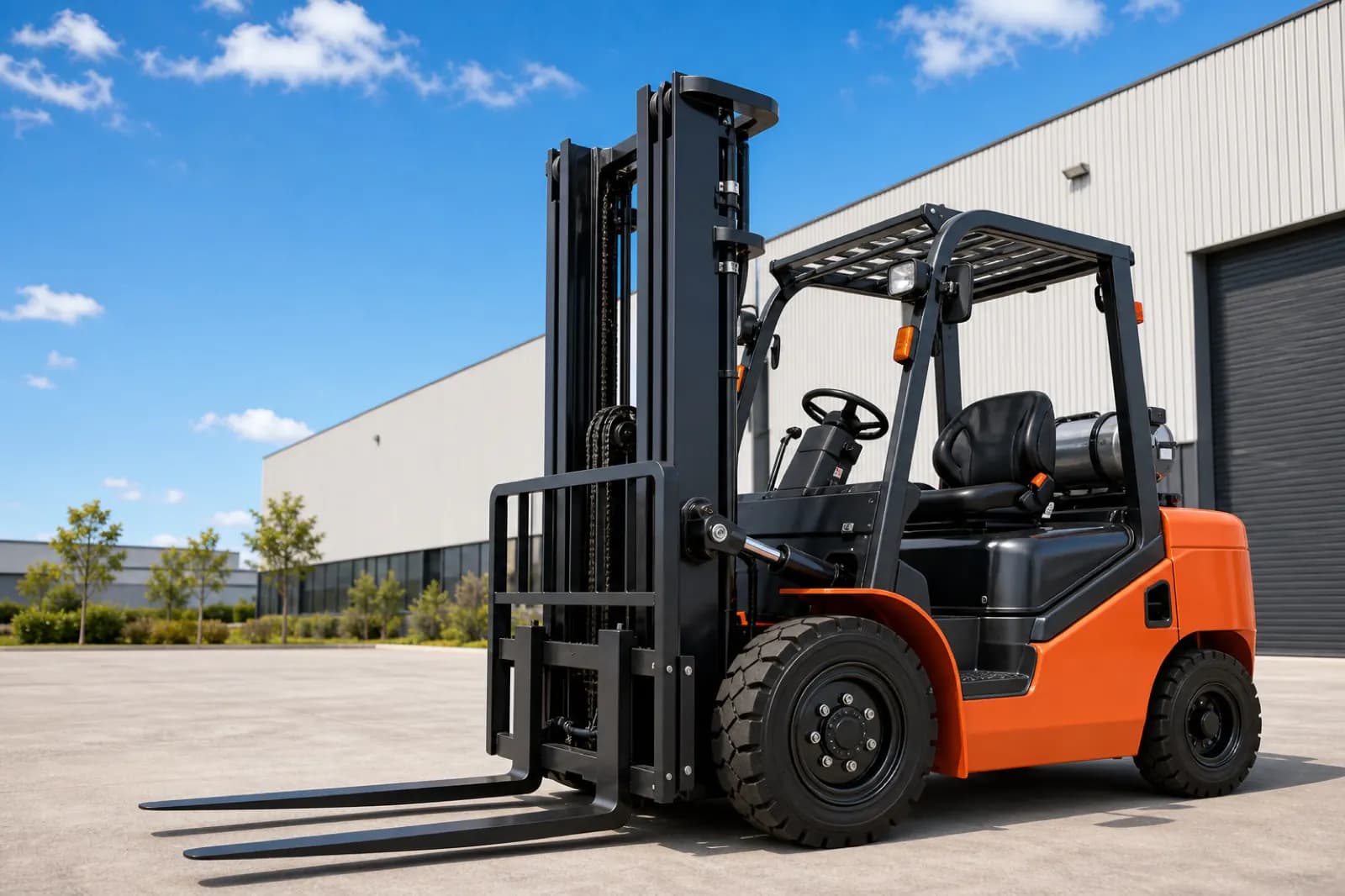
50 common English words for warehouse and forklift work in Australia, covering racking, pallets, dispatch, equipment, safety and talking with your supervisor.
Warehouse English in Australia: Quick Answer
The English most used on Australian warehouse floors falls into four groups: equipment and goods, inventory and dispatch, safety and on-site communication, and rosters and pay. Beginners don't need to memorise every word at once; start with the words you'll meet in your own work, and put each one into a sentence you can actually say.
Know what to expect before you go, and you'll start work with more confidence. Ambitious Learner offers workplace English courses for Australian Working Holiday makers and forklift-related jobs, supporting you from pre-departure prep onward as you practise understanding job ads, presenting your real experience, following warehouse instructions, and asking questions and reporting clearly when you need to.
Safety note: An English course can only help you understand workplace communication. It cannot replace the high-risk work licence required in Australia, RTO training, employer on-site training or safety procedures. Before operating any equipment, always confirm your qualifications and instructions according to site rules.
Key Takeaways: Warehouse English in Australia
A forklift is the machine; a forklift operator is the person who operates it.
- Pallet, racking, loading dock and dispatch are high-frequency words in warehousing and shipping.
- When you don't understand an instruction, check by saying Could you please repeat that? or Just to confirm...
- Hazard, PPE, high-visibility vest and safety procedure are the basic words for safety communication.
- Understanding roster, pay slip and hourly rate helps you check your shifts and pay.
Equipment and Goods: 15 Must-Know Warehouse Words
forklift|forklift truck|The forklift is ready for inspection.
- forklift operator|person who drives the forklift|The forklift operator is moving stock.
- pallet|flat base for stacking goods|Please place the boxes on the pallet.
- pallet jack|manual or electric pallet truck|Use the pallet jack for this load.
- racking|shelving system|Keep the pallets inside the racking.
- shelf|single storage shelf|Put the item on the correct shelf.
- load|goods being moved; weight carried|Check that the load is secure.
- carton|cardboard box|Count the cartons before dispatch.
- box|container for goods|This box is damaged.
- label|product or shipping label|Read the label carefully.
- barcode|product code for scanning|Scan the barcode before moving it.
- scanner|barcode scanner|The scanner is not working.
- equipment|machines and tools|Return the equipment after use.
- battery|power battery|The battery needs charging.
- charger|battery charger|Plug the charger in correctly.
Inventory, Receiving and Dispatch: 15 High-Frequency Words on the Job
inventory|stock levels and records|We need to check the inventory.
- stock|goods on hand|The stock has arrived.
- stocktake|counting all the stock|We are doing stocktake today.
- stock receiving|taking in incoming goods|I am helping with stock receiving.
- delivery|goods being delivered or arriving|The delivery arrived this morning.
- dispatch|sending orders out|These orders are ready for dispatch.
- shipment|a consignment of goods|The shipment is delayed.
- order|customer order|Please check the order number.
- order picking|collecting items for orders|I am assigned to order picking.
- packing|packaging goods|Packing must be completed by 3 p.m.
- loading|putting goods on a vehicle|Loading starts at the loading dock.
- unloading|taking goods off|We are unloading the truck.
- loading dock|bay for loading and unloading trucks|Keep the loading dock clear.
- aisle|walkway between racks|Do not block the aisle.
- aisle number|number of the aisle|The item is in aisle number five.
Safety and on-site communication: 12 English terms you must know
Safe Work Australia and state safety regulators all stress that risk management, training and site procedures are critical for forklift work. WorkSafe Queensland explains that only people who hold a high-risk work licence, or who are in authorised training, may operate a forklift; the actual rules and enforcement are managed by each state or territory regulator.
For full phrases on reporting safety issues and confirming instructions, see Your First Day as a Forklift Operator in Australia: Supervisor Instructions and Safety English.
- hazard|potential source of danger|Report any hazard immediately.
- risk|chance of harm|This creates a safety risk.
- safety procedure|the set steps for working safely|Follow the safety procedure.
- PPE|personal protective equipment|Wear the required PPE.
- high-visibility vest|reflective safety vest|Put on your high-visibility vest.
- safety boots|protective work boots|Safety boots are required on site.
- seatbelt|safety belt|Fasten your seatbelt before moving.
- pedestrian|person on foot|Watch for pedestrians.
- pedestrian area|walkway zone for people on foot|Keep out of the pedestrian area.
- blind spot|area you can't see|Check your blind spots.
- emergency stop|emergency stop button|Do you know where the emergency stop is?
- report an incident|tell someone about an accident|Report an incident to your supervisor.
Rosters, Pay and Teamwork: 8 Useful English Words
No matter how many words you memorise, you still need to be able to speak up on the job. If you're worried about Australian accents, your supervisor's instructions or interview English, the course practises common warehouse and forklift scenarios: confirming where goods go, reporting problems, asking about safety procedures and working with co-workers. Get familiar with these situations before you leave, and once you're in Australia you won't have to build every sentence from scratch.
For course content and class format, see our Australian Forklift Licence and Warehouse English Course.
- roster|shift schedule|Can I check next week’s roster?
- shift|your scheduled work period|My shift starts at 6 a.m.
- break|rest time|When is my meal break?
- hourly rate|pay per hour|What is the hourly rate for this role?
- pay slip|record of your pay|Please keep your pay slips.
- supervisor|your manager on site|Ask your supervisor for help.
- team leader|leader of your work team|The team leader will explain the task.
- handover|passing on information to the next shift|Please give a handover to the next shift.
10 Most Useful English Phrases for Warehouse Shifts in Australia
Could you please repeat that?: Can you say that again?
- Could you show me how to do this?: Can you demonstrate how it's done?
- Just to confirm, this pallet goes to dispatch, right?: Checking that this pallet is being shipped out.
- Where should I put this load?: Where does this batch of goods go?
- Is this item ready for picking?: Can this item be picked now?
- I noticed a damaged box.: I found a box that's damaged.
- The scanner is not working properly.: The scanner is malfunctioning.
- There is a hazard in aisle three.: There's a safety risk in the third aisle.
- I have finished the task. What should I do next?: I'm done—what's next?
- Could I check my roster and pay slip?: Can I see my shift schedule and payslip?
Warehouse English that Taiwanese job seekers most often mix up
warehouse vs factory|a warehouse is a storage/logistics site; a factory is a manufacturing plant|Check the actual duties when applying for a job.
- stock vs inventory|stock means goods or items on hand; inventory often refers to stock records or the idea of counting stock|inventory accuracy is a common résumé keyword.
- loading vs unloading|loading means putting goods on; unloading means taking goods off|The two often come up together in pre-shift briefings.
- licence vs training|a licence is a legal or formal qualification; training is instruction|Don't describe a class or English course as holding a licence.
- hazard vs incident|a hazard is a potential danger; an incident is something that has already happened|Report any hazard you spot following site procedures.
Quick quiz: Can you understand warehouse instructions?
Choose the best word:
Answer: pallet
Answer: aisle
Answer: dispatch
Answer: hazard
Answer: roster
- Please move the boxes onto the before loading the truck.
- Keep the clear so people can walk safely.
- The orders are ready for .
- Always report a safety to your supervisor.
- Check your to see when you are working next week.
Conclusion: From Vocabulary to Warehouse English You Can Actually Use
The core of warehouse English in Australia is being able to communicate safely, clearly and in real time. Start by learning four groups of words: equipment and goods, dispatch, risks, and rosters, then practise 2 to 3 on-site phrases every day. If you are preparing for forklift or warehouse work in Australia, focus on three things first: understand the keywords in job ads, describe your real experience in English, and ask for confirmation whenever a safety instruction is unclear. These skills will help you enter the workplace with more confidence and lay the foundation for learning more workplace English for forklift jobs.
Further reading: How to Get a Forklift Licence in Australia: LF/LO Classes and the Application Process
FREQUENTLY ASKED QUESTIONS
FAQ
Q01Do you need good English for warehouse work in Australia?+
You don't need to be fluent from day one, but you should at least be able to understand safety instructions, confirm your tasks, report problems and communicate with supervisors and co-workers at a basic level. Hospitality and customer service jobs usually involve more customer interaction, while warehouse work puts particular emphasis on safety and following instructions.
Q02What's the difference between a forklift and a forklift operator?+
A forklift is the piece of equipment; a forklift operator is the person who drives it. On résumés and in job ads you may also see job titles such as warehouse operator, storeperson or warehouse worker.
Q03Do you always need a forklift licence for warehouse work in Australia?+
Not necessarily — it depends on whether the role involves operating a forklift. But operating certain high-risk equipment usually involves legal qualifications and state-specific rules. Always follow the latest requirements of the job ad, the employer, the training provider and your local workplace safety regulator.
Q04What should I do if I don't understand my supervisor's instructions?+
Don't pretend you understand. You can say Could you please repeat that?, or use Just to confirm... to restate what you understood. When equipment, safety or the location of goods is involved, checking proactively is both professional and safe.
Q05Can a warehouse English course replace a forklift licence?+
No. An English course can help you understand job ads, prepare your résumé and interviews, and follow on-site instructions and safety communication, but it cannot replace a legally required licence, RTO training, on-site assessment or employer requirements.
Q06Why does a pay slip matter?+
A pay slip shows your pay details and helps you check your hours, wages and entitlements. The Fair Work Ombudsman explains that employers must keep employment and pay records and provide pay slips. If you have questions, keep your records first and check the official information.
Want to turn this into an action plan that fits you?
Start with a free trial lesson to pin down your level and next steps.
Free Consultation →Ask us about working holiday prep, English lessons, or job referrals in Australia

