

If you ask me where English learning ends, my answer now is probably a bit different from when I'd just graduated from college.
Back then, the goal in front of me was clear: prepare for the test and get ready to study abroad. Looking back now, I realize that wasn't the end of my learning journey — it was the beginning.
From graduating college, to getting into UT Dallas, to landing an engineering job in the US, English has shown up at every stage. It's just that with each step forward, what I need it to help me do has changed too.
英文沒有停在錄取通知上,也沒有停在錄取工作的那一天。
Why did I start taking English seriously after college?
After college, life started presenting new choices. Where should I go next? What kind of work should I do? Should I keep studying? These questions were no longer just imagining the future — they were directions I needed to prepare for step by step.
For me, studying in the US was one of those directions, and English was a part of the preparation I couldn't skip.
Once learning connected to my own next step, English was no longer just a school subject. It had a more concrete purpose, and I started seriously putting in the time.
This is where my English learning story really began: not waiting until everything was ready to set off, but starting with what I could do.
The English test-prep course gave my preparation a clear direction
Later, I joined Ambitious Learner's English test-prep course.
During this learning process, my English improved noticeably. For me, that progress wasn't only about the test in front of me — it also tied into my later study-abroad preparation.
Looking back, I wouldn't describe the whole experience as taking one course and having my life suddenly change. Preparation takes commitment, and learning takes persistence. The course was an important part of this journey, but my own effort couldn't be left out either.
The test gave me a goal I needed to reach right then, so learning English was no longer just a vague thought that it “might come in handy someday.”
I started preparing for a concrete next step.
As my English improved, I made my way to UT Dallas
After that, I was admitted to The University of Texas at Dallas (UT Dallas).
From throwing myself into English after college to heading off to study in the US, my original plans began to make real progress.
Test-prep English was part of that preparation, but admission isn't decided by a single score or a single course. What mattered more to me was that I kept moving in my own direction throughout the process.
That gave English learning another layer of meaning. It wasn't just helping me prepare for an exam — it was going with me into the next stage.
Admission isn't the end of learning English
When preparing to study abroad, it's easy to see admission as the finish line. After all, it's the most concrete goal in front of you, and the one you most want to achieve.
But what came next showed me that after getting accepted, life still has many new stages ahead.
Tests have their requirements, school has its tasks, and work has its needs. Finishing one of them doesn't mean you never need to learn English again.
Looking back now, the preparation before studying abroad was more like a starting point. It got me to build my skills seriously, and the life that followed gave those skills a direction to keep growing.
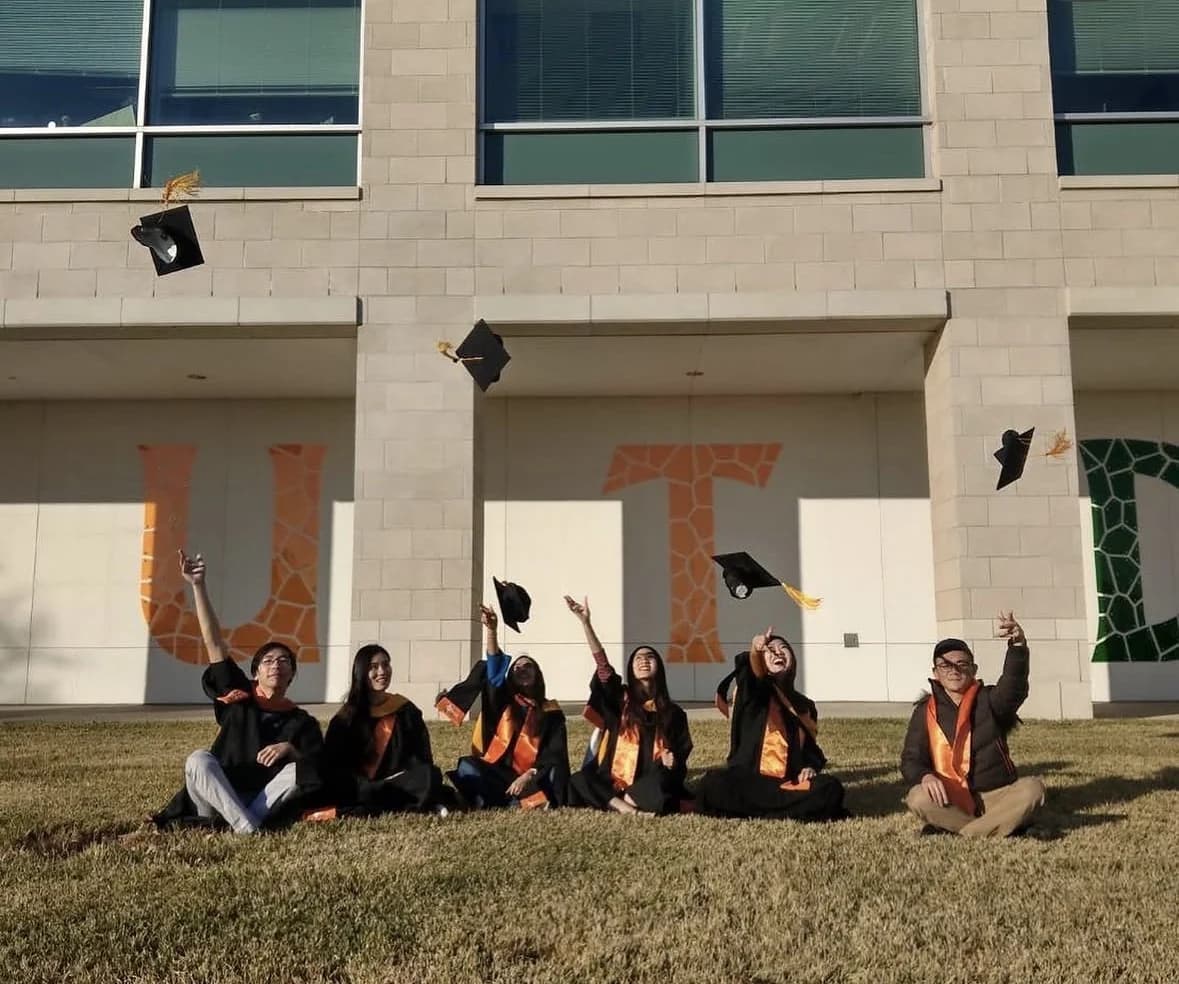
From UT Dallas to an Engineering Job in the US
Later, I landed an engineering job in the US and started working as an engineer.
Moving from school to the workplace changed the role English plays. Before, my learning centered on test prep; now I need my learning to fit my work.
An engineer's technical skills matter a lot, and workplace English is part of what I keep learning at this stage.
That's also why I didn't stop my English lessons after the study-abroad prep stage. My life has moved to a new place, and my learning can shift with it.
For me, continuing to learn English isn't going back to the start — it's preparing for the next step.

I'm already an engineer — so why do I keep taking English lessons?
Because my learning goal has shifted from test-prep English to workplace English.
I'm still taking English lessons, but the focus isn't quite the same as after college. Back then, I was preparing for tests and studying abroad; now, I want my English learning to fit the needs of my working life.
Going abroad doesn't mean your learning is done. Starting work doesn't mean you can stop practicing all the skills you need.
For me, continuing lessons is a way to keep learning part of my life. Goals can change, but the commitment doesn't have to stop just because you've hit a milestone.
How is test-prep English different from workplace English?
The main difference is what you need to accomplish in English.
When preparing for a test, learning has to match the exam's requirements. Once you're in the workplace, you need to adjust your direction to what the job demands — you can't handle every new situation with your old test-prep methods.
My learning journey has been about moving, little by little, from one stage to the next.
The English test-prep course was an important part of my preparation back then; continuing with workplace English now is about fitting my current life. One didn't replace the other — they serve different goals at different stages.
What English really gave me was more than one acceptance letter
If you only look at the results, my story is simple: I learned English after college, got into UT Dallas, and later landed an engineering job in the US.
But for me, this journey isn't just a few results lined up together.
It's also about turning what you want to do into a direction you can prepare for, again and again. If you want to study overseas, start preparing your English; when you reach the working stage, shift your learning focus to match.
English doesn't guarantee everyone the same school or job, but it's a skill I've kept investing in throughout my studies and career.
That's why I'm still learning today.
Is it too late to start seriously preparing English for study abroad after college?
You can start now, but your plan needs to reflect your own level, goals, and application timeline.
My starting point was diving into English after college. That doesn't mean everyone will prepare at the same pace, or that you can ignore application requirements.
If you're also thinking about studying abroad, I think what's worth figuring out first isn't how long it took someone else, but what you need to prepare for your own next step.
Clarify your direction, then plan your learning — so English prep isn't just an idea, but something you can carry out step by step.
How long does it take to see progress when preparing for an English test?
There's no fixed timeline that works for everyone. Your plan needs to consider your current level, the target requirements, and the time and practice you can put in.
Even when everyone is preparing for a test, each person's starting point and needs can differ. Rather than chasing a set number of weeks, first get clear on your immediate goal and the areas you need to strengthen.
For me, test prep was one part of the whole journey. As I moved on to study and work in the US, my learning direction kept changing too.
So English learning doesn't have to be measured only by “how long until I'm done.” You can also ask yourself: in the next stage, what do I want to be able to do in English?
From College Graduate to an Engineering Job in the US
Even now, my English learning hasn't ended.
What matters most to me about this story isn't just where I ended up, but that after reaching a new stage, I still want to keep learning.
My English Learning Timeline
University Graduation
Committed to learning English to prepare for studying overseas.
English Test Preparation Course
Took Ambitious Learner's English Test Preparation course.
English Skills Improved
Through consistent effort, my English improved noticeably.
Admitted to UT Dallas
Admitted to The University of Texas at Dallas and headed to the US to study.
Hired as an engineer in the US
Hired for an engineering position in the US.
Now
Continuing English lessons, with a focus on Workplace English.
常見問題
Can I start preparing my English for study abroad after graduating from university?
Yes. Yuiti Shih committed to learning English after graduating from university. That said, your own preparation plan should be based on your current level, target program and application timeline — you can't simply copy someone else's schedule.
What English course did Yuiti Shih take?
Ambitious Learner's English Test Preparation course. Yuiti took this course while preparing to study abroad and saw clear improvement in English. Yuiti still takes English lessons today, now focusing mainly on Workplace English.
Which university was Yuiti Shih admitted to?
The University of Texas at Dallas (UT Dallas).
Will taking a test-prep English course get me into UT Dallas?
No. University admission usually depends on your academic background, English ability, application documents and other factors, and an English course only helps with part of that preparation. In Yuiti's case, the test-prep English course helped build English skills and prepare for the test, but admission was still decided by the full application. Always check the official requirements of your target program.
How long does test-prep English take to show progress?
There's no set timeframe. How quickly you improve depends on your starting level, target requirements, how you practise and how much time you put in, so your preparation plan should be tailored to you rather than measuring everyone by the same number of weeks.
Do I still need English lessons after becoming an engineer?
Not necessarily — it depends on the English your job requires. After being hired as an engineer in the US, Yuiti kept taking English lessons with a focus on Workplace English. Whether you need lessons, and how to arrange them, should come back to your own work and learning needs.
How is English for tests different from Workplace English?
Test-prep English is mainly geared to exam requirements, while Workplace English addresses the language needs of your job. They can be different stages of the same long-term learning journey, but a test result shouldn't be equated with every kind of workplace communication skill.
Your next step can start with preparing your English, too
Yuiti started with English test preparation to build the English skills needed for studying abroad, and now continues learning English for work situations. If you're preparing to study abroad or want your English to keep up with your job, start by exploring the course that matches your goals.